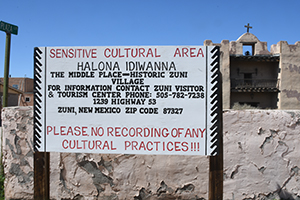
There were actually six settlements in the Zuni area when the Spanish arrived in 1539. The current Zuni Pueblo was one of them, then called Halona Idiwan'a, "Tthe Middle Place". After the Pueblo Revolt in 1680, this was the central pueblo.
The original people of the Zuni area managed a difficult existnace in this harsh environment. Zuni Pueblo was originally known as Halona and was probably first inhabited around A.D. 1100 by the ancestors of the Pueblo peoples. The Spanish were searching for the Seven Cities of gold and Coronado encountered the Zuni settlements in his 1540-1542 expedition. It wasn't until the early 1600s that the Spanish took a greater interest in the area because it was so remote from the settlements along the Rio Grande. Spanish Franciscan Missionaries began their work about 1629 establishing three Missions in the Zuni area, Mission of Nuestra Señora de Guadalupe de Zuni, La Purísima Concepción de Hawikuh, and the unexcavated church at Kechipan near Ojo Caliente, the latter two are ruins.
A Mission at Zuni was not continuous and records are not always complete. The first Mission period began in 1629 when Fray Roque de Figueredo founded a Mission, but in 1632, a Zuni revolt against harsh Spanish demands resulted in the death of two Franciscan friars. A missionary returned in the 1650s and directed the construction of a single-nave church and residency ( convento). The construction was completed in 1661, but the new Mission was burned during the Pueblo Revolt of 1680. In 1700, Fray Juan de Garaycoechea reestablished the mission and repaired the church and convento. Following Mexican independence from Spain and the secularization of the Missions, by 1821, the Franciscan priests left the mission and by 1824, there was no resident priest and by the 1890s, the church had deteriorated. There were several attempts to restore and rebuild the church including 1901-1902. In 1921, priests were reassigned to the pueblo.
The first Mission is disputed. There is some references to Mission Nuestra Señora de la Candelaria de Halona between 1663-1666 A.D. at Hawikuh.
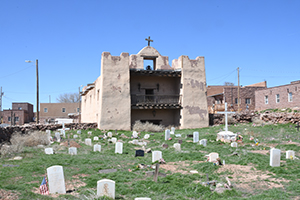
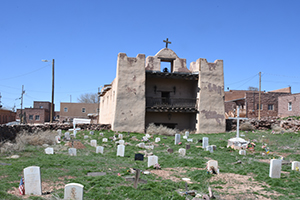
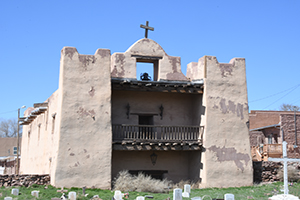
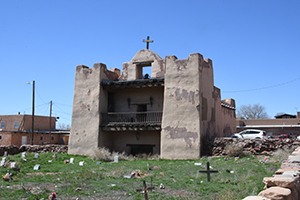
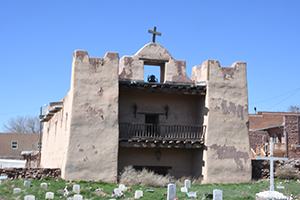
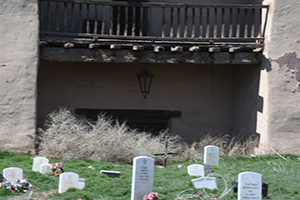
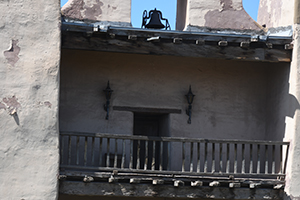
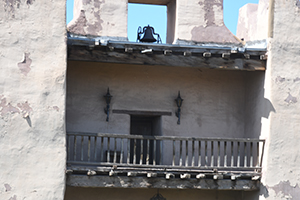
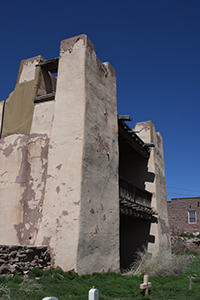
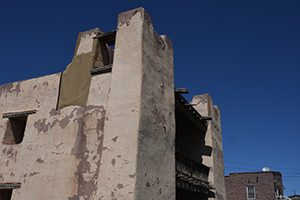
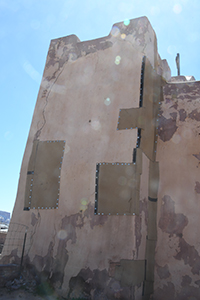
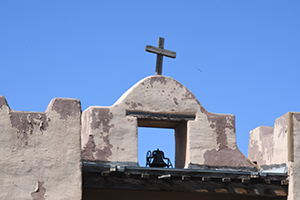
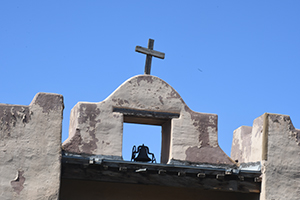
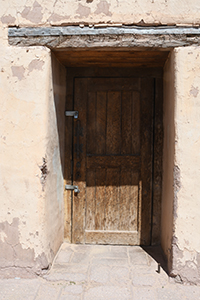
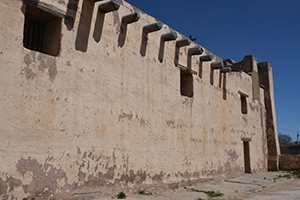
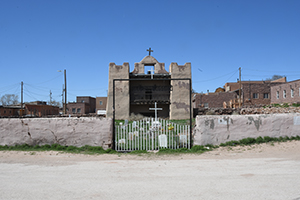
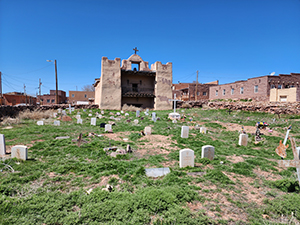
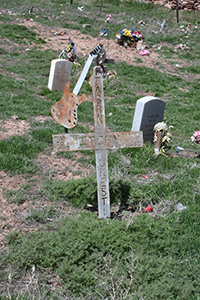
The church is a single-nave structure measuring 118.5 by 38.5 feet, with a bell tower (a second tower and balcony were added later), The mission cemetery is unmaintained and restricted except for rare burials. While most of the puueblo buildings are stone with mud mortar covered with plaster, the church is adobe.
In 1966 - 1970, the National Park Service oversaw the excavation and restoration of the mission. The church fell into disuse by 2004. Further restoration efforts were made, but structural problems remain. The Halona Pueblo is listed in the National Register of Historic Places and Zuni Pueblo is among the largest of the still inhabited pueblos in the United States.
|