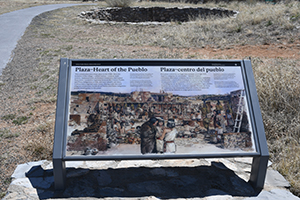
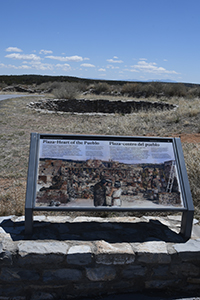
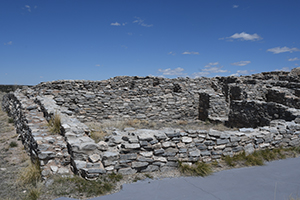
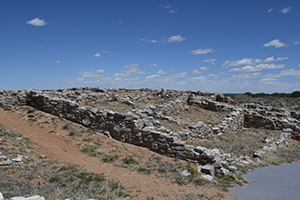
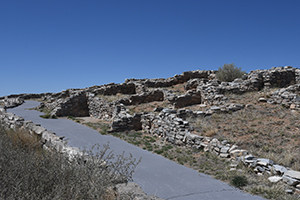
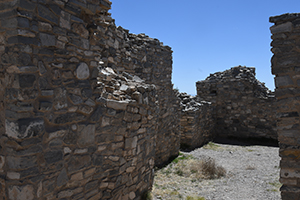
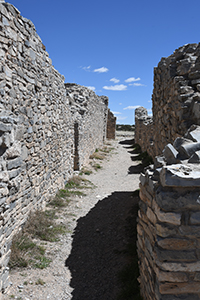
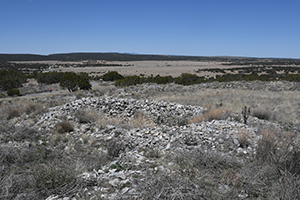
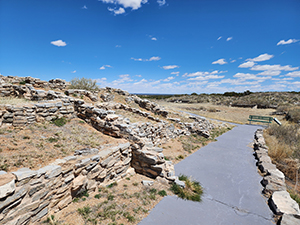
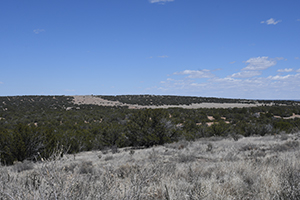
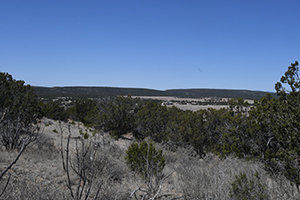
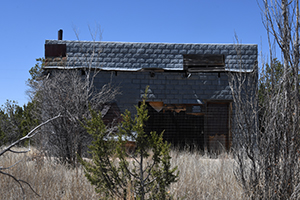
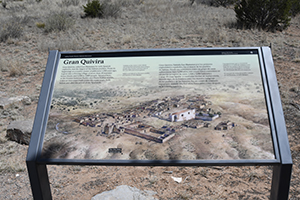
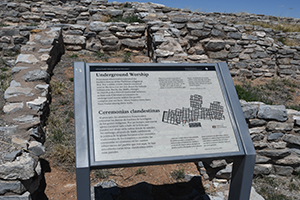
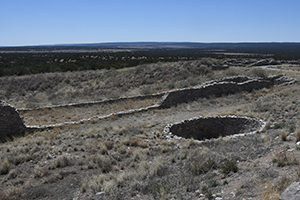
The Gran Quivira site was first settled about A.D. 800 when a sedentary native population began dwelling in pithouses. By A.D. 1300, the Tompiro-speaking peoples inhabited the area and built culturally distinct pueblo masonry architecture. From about A.D. 1000 to the 1600s, three villages served as a major trading center for Plains people, people from the Pacific Coast, and people from the Great Basin. Gran Quivira was the largest of the Salinas villages with a population of about 3,000. Water was scarce, but the people subsisted on hunting, gathering, and some agriculture, trading with the Apaches and other tribes. The Tompiro built a circular pueblo on the north side of the site between 1300 and 1400. They began a rectangular pueblo atop the earlier one about 1550. The main 250 room block was constructed of local blue-gray limestone laid with a yellow clay mortar. The population was about 2,000 by the seventeenth century.
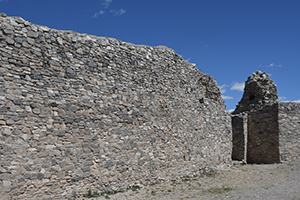
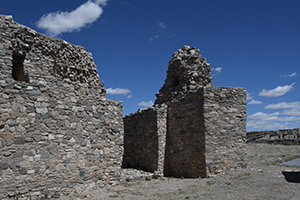
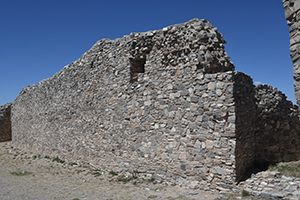
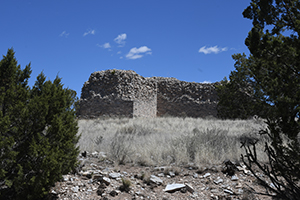
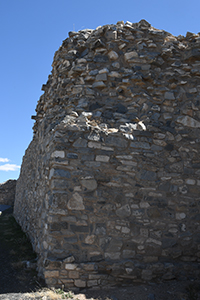
When the Spanish first arrived in 1598, they focused on the large pueblos. When Don Juan de Onate arrived at Las Humanas, he administered from the native people, an oath of obedience and subservience to the Spanish. About 1626, the pueblo was designated as a visita of San Grégorio de Abó Mission and by 1629, Las Humanas had its own resident priest, Fray Francisco Letrado, assisted by Fray Estévan de Perea. Fray Francisco de Letrado, began construction of the first permanent Mission. He was moved out in 1631, leaving Fray Francisco de Acevado in charge and he completed construction of Inglesia de San Isidro in 1635. Construction of the church Inglesia de San Isidro began in 1630 and continued until 1635. The church was built of limestone quarried on site and measured 109 feet long by 29 feet wide, it resembled the design to the church at Abo. A campo santo, walled cemetery, was attached to the structure on the east of the church. Fray Diego de Santander was permanently assigned to Gran Quivira in 1659 and after, construction on a new larger church, San Buenaventura, began, built with limestone quarried on site held together with caliche-based mortar. San Buenaventura, a single-nave church, is slightly trapezoid, possibly because of difficulties leveling the site. The 109 foot long nave narrows in width from 29 feet 10 inches at the entrance to 26 feet 10 inches at the transepts. Most of the friary was completed between 1663 and 1666, but it is believed the church was never completed. The 5-6 feet thick limestone walls rise irregularly to 15-20 feet and the nave was left open. Fray Joseph de Parede came to the Mission in late 1666.
In the mid-1600s, several events lead to the abandonment of the settlement. There were disputes between the native people and the Spanish. Drought and famine left the people surviving on imported food and eventual starvation deaths in 1668. Apaches raided Las Humanas and destroyed the mission and pueblo in 1670, killing some and taking other captive. By 1672 a decision was made to abandon the Mission.
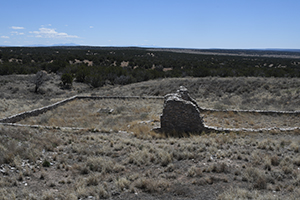
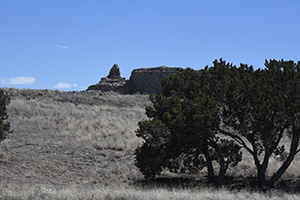
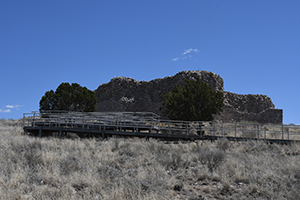
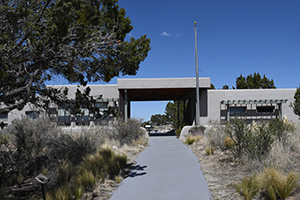
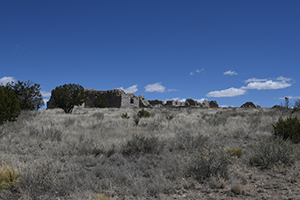
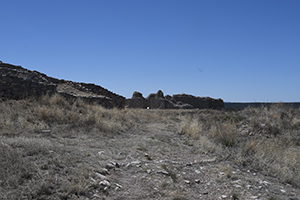
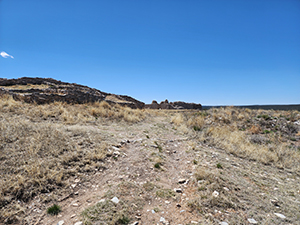
In 1773 to 1774 John Rowzée Peyton, a Virginian first described the abandoned site. Again in 1846, James W. Abert, and in 1853, Major James Henry Carleton, also described the site. Archaeological work begin in 1883 and President Taft established Gran Quivira National Monument on November 1, 1909. San Isidro was first excavated and stabilized in 1951 by National Park Service archeologist Gordon Vivian, and Alden Hayes did additional work in the 1960s. Stabilization efforts by the National Park Service continues. Today, Gran Quivira is part of the Salinas Pueblo Missions National Monument with remains of two Mission churches, San Buenaventura and San Isidro, the convento, and an excavated pueblo.
|




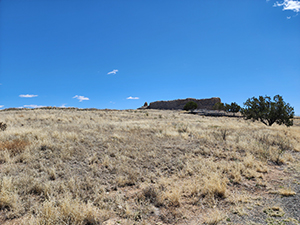
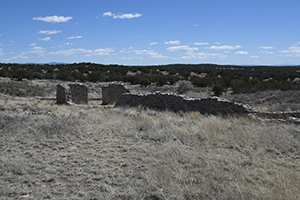
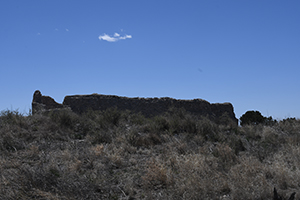
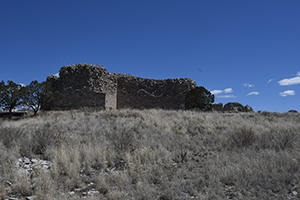
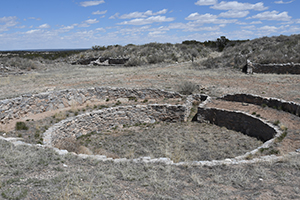 Ruins and kivas.